

Digital products, websites, software, and AI solutions built with clarity and care.
Manchester 21, Zurich, CH
 Home
Home 

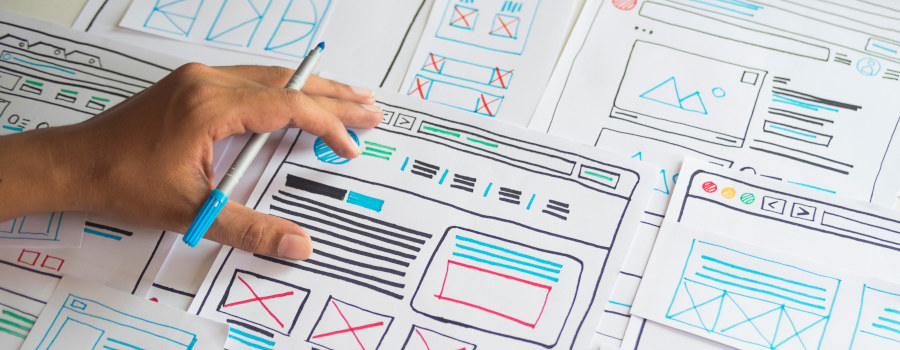

Many ways, building a website today is a lot easier than it was when we started out 25 years ago. Our designers, developers and content specialists have so many more tools and even AI at their disposal now, and the process can move much faster than it used to.
Before You Get Started
Many people are so eager and excited to get a new website that they jump straight to design and copy—but a truly unified design requires a lot of prep work to bring the right pieces together. The more you have planned, the more focused and effective your outcome will be. What does that look like?
Chart out your goals and vision
Before the kickoff meeting with our web design team, take some time to define your marketing goals for the new website. Do you want to generate leads, boost brand awareness, or increase online sales? It may be more than one.
Also think about the entire menu of products and services offered by your company. Are there specific items you want to highlight prominently (or that should be minimized)? This helps us prioritize how information is presented, both through visuals and in your web copy.
Entering our initial meeting with a clear vision and expectations helps us tailor the design and functionality to resonate with your target audience and drive the desired actions.
Learn more: Why you should use a web design agency for your next site.
Know thy audience
Highlighting your products and services is important, but even more important is knowing your audience. This will help your design team build a site that speaks directly to the wants and needs of your most profitable customers. Useful customer info we will likely ask for includes:
Think about needs vs. wants
We understand websites can hold a vast amount of information and cool features, but that needs to be balanced with the project scope and desired user experience. More is not always better when it comes to your website’s content or functionality.
To streamline the process, categorize your requests into “must-haves” (important content and features) and “nice-to-haves” (content or features that would be a bonus, but not critical). This prioritization helps us create a focused and effective website within the agreed-upon scope.
 English (EN)
 Danish (DA)
 French (FR)
 German (DE)